


Iceland
A country built on fire and ice, where the auroras dance in winter and the sun barely sets in summer
Iceland fits on a map smaller than Kentucky but contains more landscape than most countries twice its size. Active volcanoes, calving glaciers, geothermal lagoons, basalt cliffs, the kind of moss-covered lava fields that look engineered for sci-fi sets, and pristine waterfalls in every direction. Easy to reach from the U.S. East Coast on a five-hour overnight flight, English is universal, the food scene punches well above its weight, and a week-long Ring Road drive remains one of the best self-guided road trips in the world.
Gallery
Places To Go
Reykjavik & the Capital Region
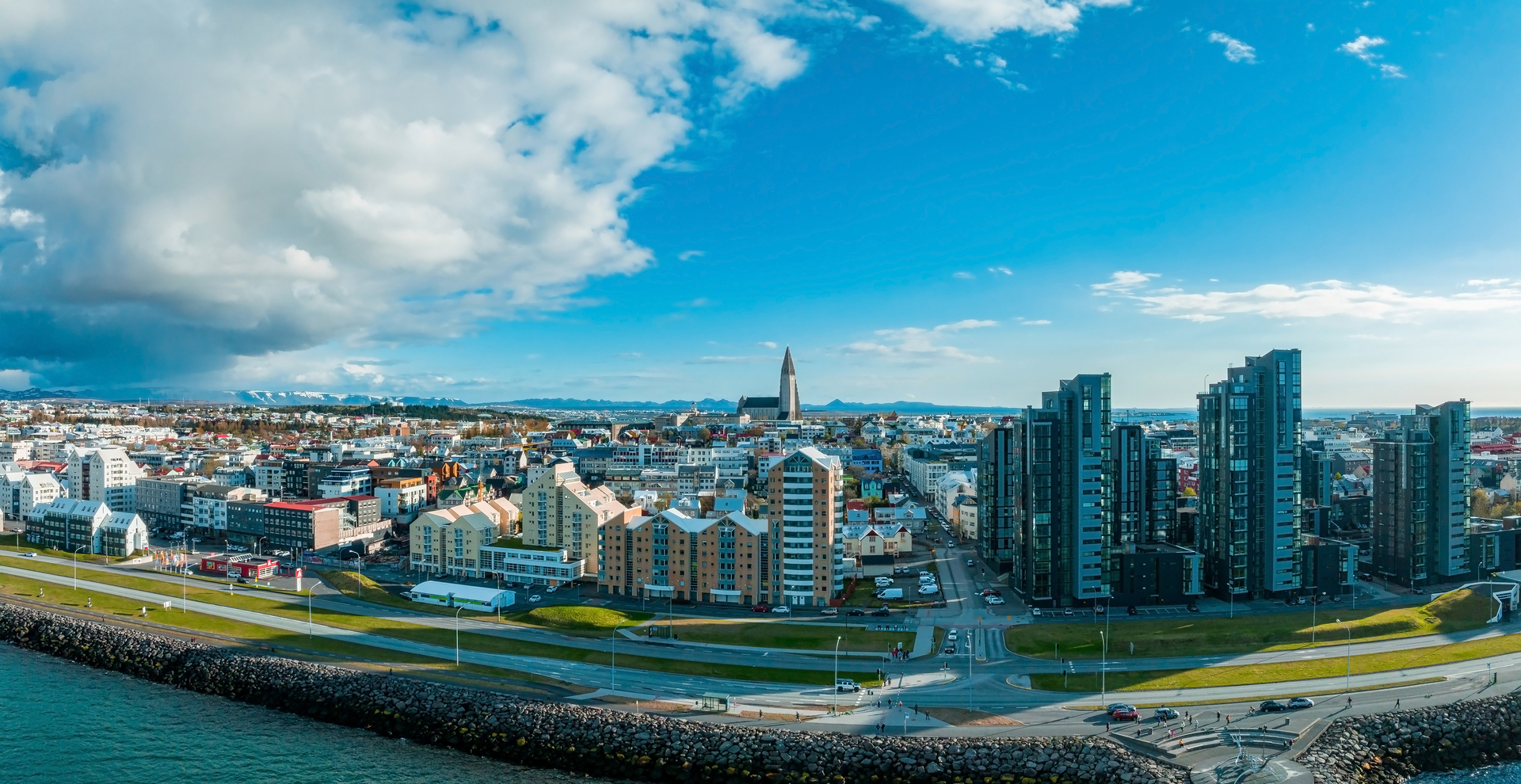
Reykjavik: The world’s northernmost capital. Colorful tin-roofed houses, the futuristic Harpa Concert Hall on the harbor, Hallgrímskirkja church towering over the old town, and a remarkably good food and bar scene for a city of just 130,000.
Blue Lagoon: The famous geothermal spa — milky-blue water at 100°F surrounded by black lava fields, 20 minutes from Keflavík airport. Book the in-water silica mask and an algae mask. Reservations required, often weeks out.
Sky Lagoon: A quieter, more local alternative to the Blue Lagoon, with infinity-edge views over the North Atlantic and a 7-step thermal ritual.
The Golden Circle
The classic day trip out of Reykjavik, three big stops in a 6–8 hour loop:
- &Thorn;ingvellir National Park: The historic site of Iceland’s parliament (founded 930 AD) AND the spot where the North American and Eurasian tectonic plates pull apart. You can snorkel between the continents at Silfra fissure.
- Geysir & Strokkur: The original geyser (now mostly dormant) and its very-active neighbor, which erupts every 5–10 minutes.
- Gullfoss: A two-tier waterfall thundering into a deep canyon. Slick boardwalk, frequent rainbows, dress for the spray.
The South Coast
The most rewarding day-or-two extension from Reykjavik — waterfalls and glaciers along Highway 1.
Seljalandsfoss: A 200-foot waterfall you can walk behind.
Skogafoss: Equally tall, blockier, with a hike to the top of the falls.
Reynisfjara Black Sand Beach: Basalt columns, fierce sneaker waves (genuinely dangerous — respect the warning signs), and views of the Reynisdrangar sea stacks.
Jökulsárlón Glacier Lagoon & Diamond Beach: Icebergs calved from Breiðamerkurjökull float through a lagoon to the sea, then wash back up on a black sand beach as crystal-clear “diamonds.” The most photographed spot in southern Iceland.
Vatnajökull National Park: Europe’s largest national park, home to ice caves, glacier hikes, and the highest peak in Iceland.
The Snæfellsnes Peninsula & the West
Often called “Iceland in miniature” — a peninsula that packs in glacier, volcano, lava fields, fishing villages, and waterfalls in one easy day or overnight from Reykjavik.
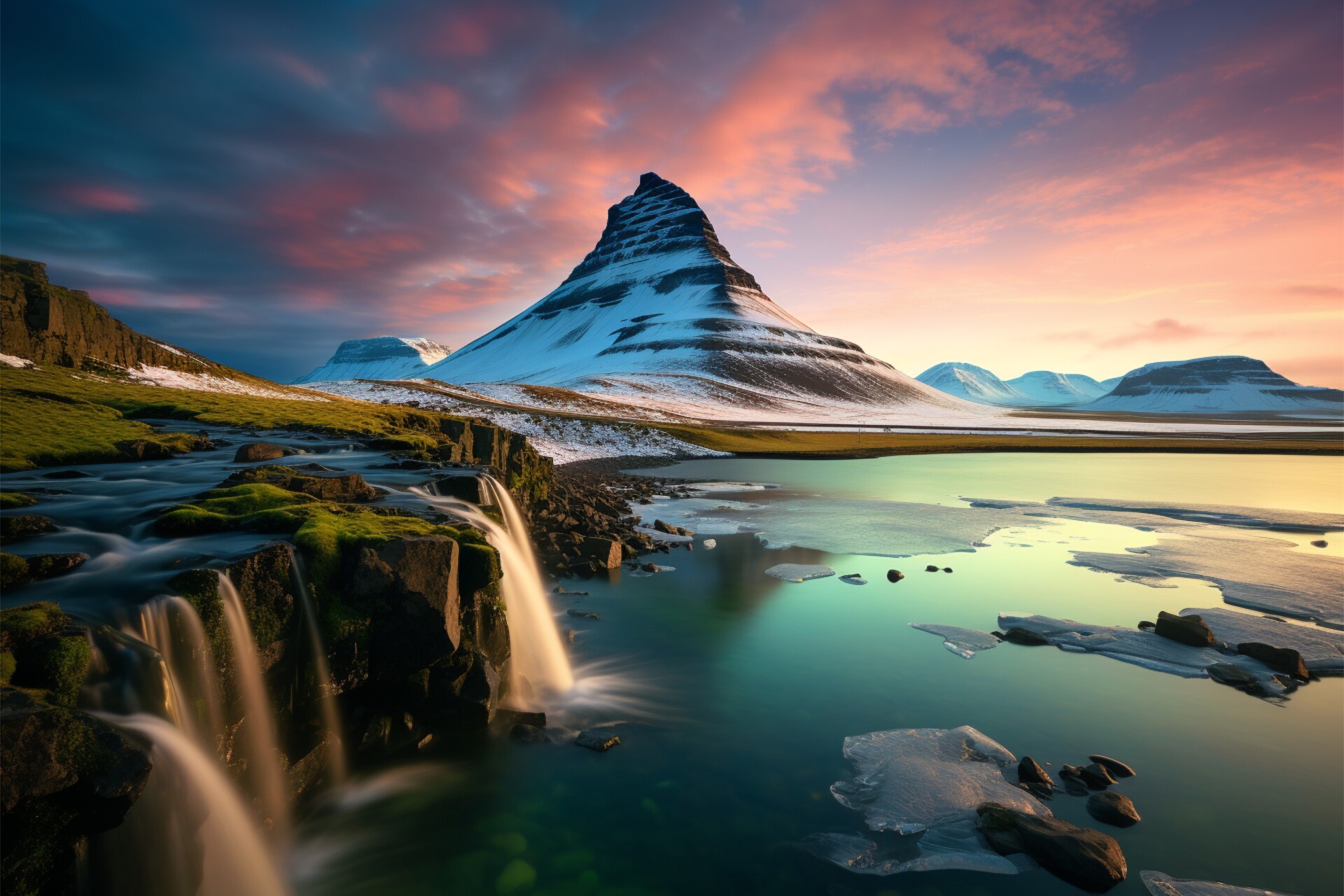
Kirkjufell Mountain: The most-photographed mountain in Iceland, with Kirkjufellsfoss waterfall in the foreground. Particularly magical with the aurora overhead.
Snæfellsjökull glacier-volcano: The setting of Jules Verne’s “Journey to the Center of the Earth.”
The North & the Westfjords
Akureyri: Iceland’s second city, gateway to the north, with skiing in winter and whale watching from neighboring Húsavík.
Lake Mývatn: A volcanic lake area with bubbling mud pots, nearby geothermal baths (the Mývatn Nature Baths are like a quieter Blue Lagoon), and the Krafla caldera.
The Westfjords: The most remote, least-visited corner of Iceland — sweeping fjords, the Látrabjarg bird cliffs (puffins!), and Dynjandi waterfall.
Things to See
The Northern Lights
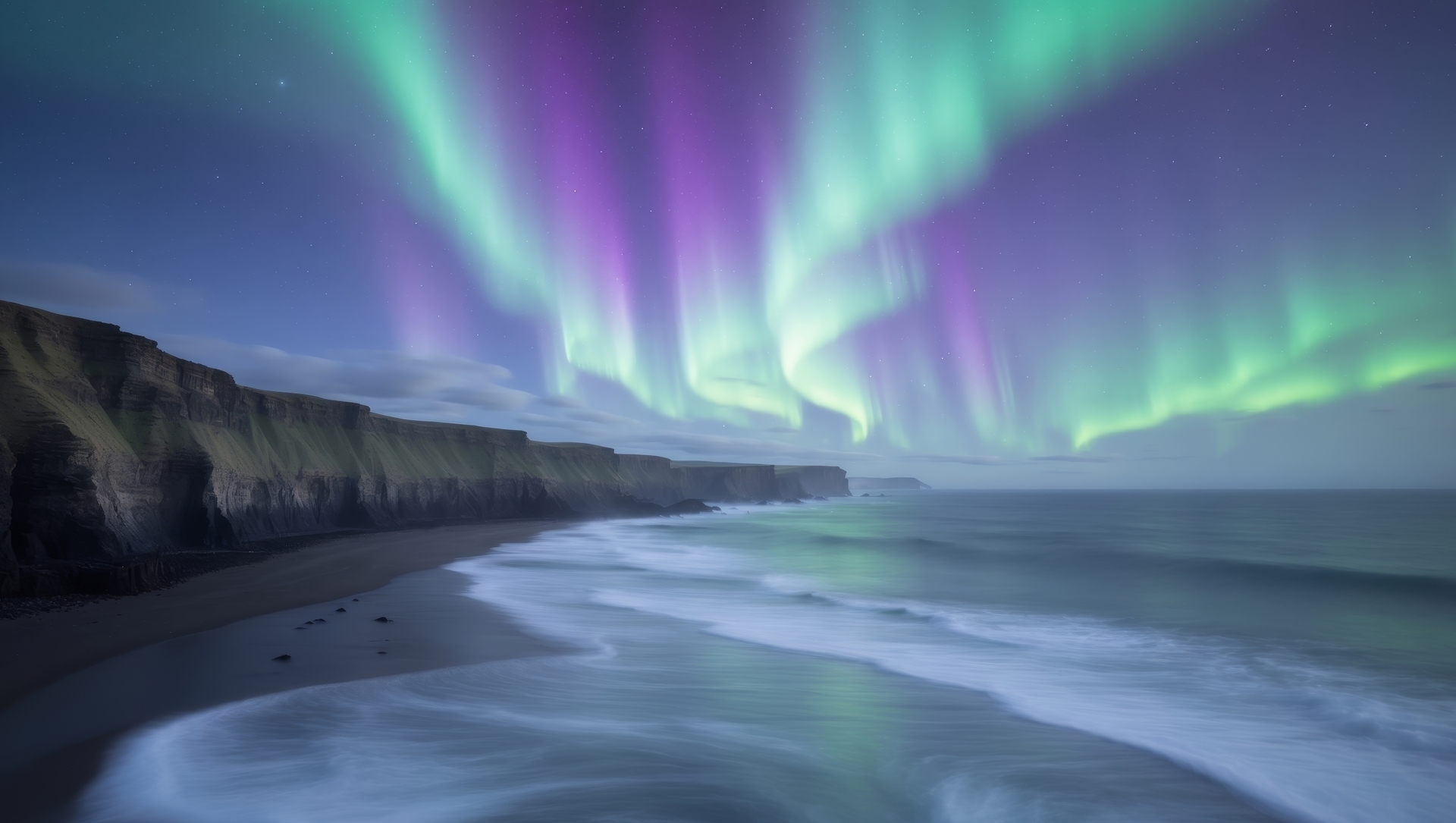
Aurora season runs roughly late September to early April. You need three things: darkness (so no midnight-sun summer), clear skies (Iceland’s weather is fickle, so plan multiple nights), and solar activity (use the Icelandic Met Office aurora forecast). Best viewing is well away from city lights — a country lodge or a guided aurora-hunt minibus tour are both reliable approaches.
Waterfalls & Geological Wonders
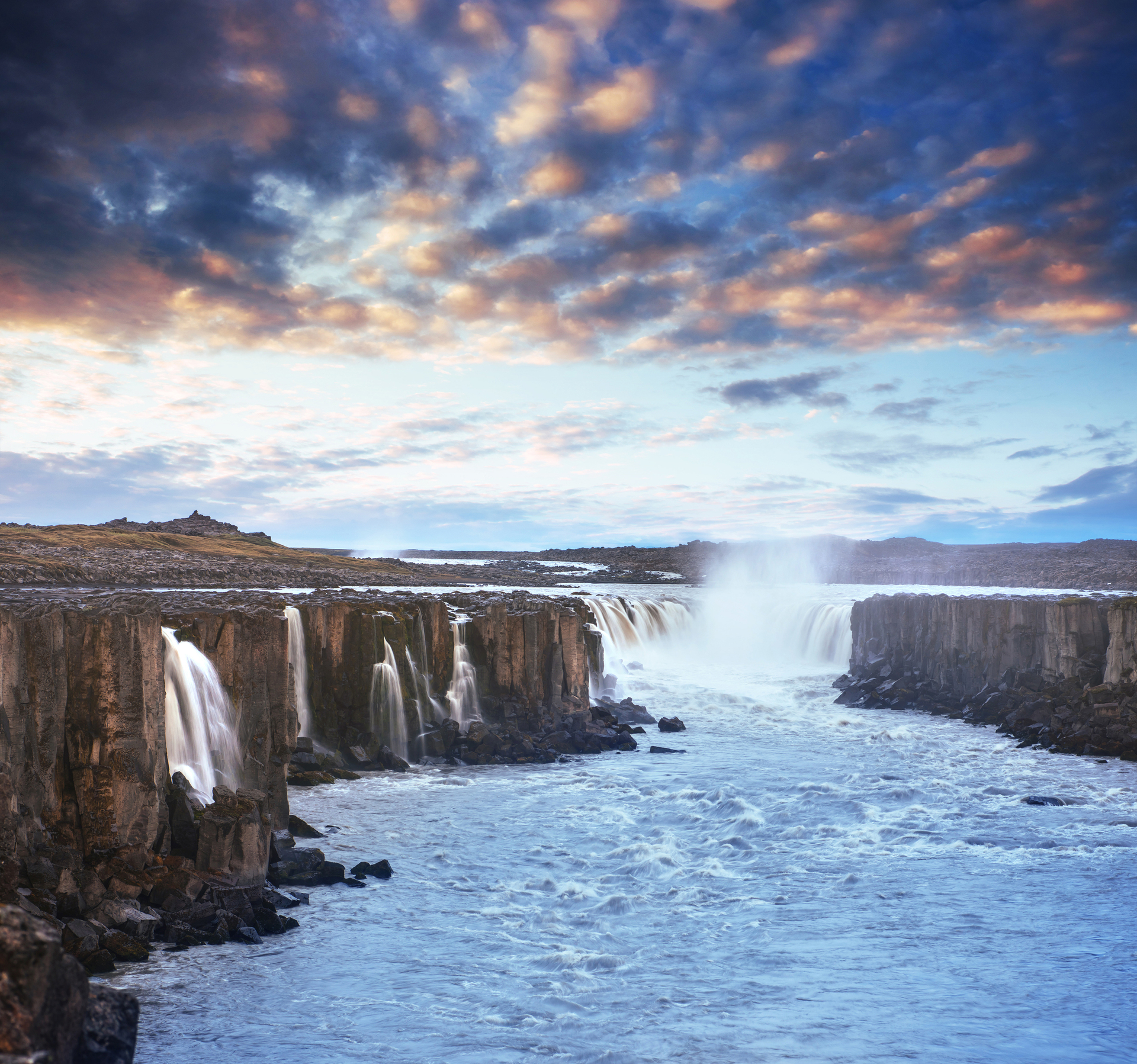
Selfoss & Dettifoss: In the northeast. Dettifoss is the most powerful waterfall in Europe by volume; Selfoss is a wider, photogenic curtain just upstream.
Aldeyjarfoss: A lesser-known basalt-column waterfall in the central highlands.
Strokkur geyser: Reliable 5–10 minute eruptions, 50–100 feet high.
Fagradalsfjall & Geldingadalur lava fields: Recently erupted volcanic areas near the airport — weather and authorities permitting, sometimes accessible by guided hike.
Things to Do
- Drive the Ring Road (Route 1) — 5–10 days, 825 miles, encircles the entire island
- Glacier walk on Sólheimajökull or Falljökull (crampons and guide required)
- Ice-cave tour inside Vatnajökull (November–March only; conditions-dependent)
- Snorkel or dive between the tectonic plates at Silfra (wetsuit and guide; year-round)
- Whale watching from Húsavík or Reykjavik — humpbacks, minkes, occasionally orcas
- Puffin colonies at Látrabjarg (Westfjords) or Vestmannaeyjar islands (May–August)
- Soaking in a remote thermal pool — Reykjadalur hot river, Landmannalaugar in the highlands
- Aurora hunting on a guided minibus tour with re-tries on cloudy nights
- Icelandic horseback riding — the breed is unique to the island, with a special fifth gait called the tölt
Notable Places to Stay
Reykjavik
The Reykjavik EDITION: The newest design-luxury entry, on the old harbor.
Hotel Borg: The grand-dame Art Deco hotel on the main square. Old-Reykjavik character.
101 Hotel: Boutique design hotel in the heart of downtown.
Out in the country
The Retreat at Blue Lagoon: Suites with private lagoon access. The most expensive bed in Iceland, also one of the most memorable.
Hotel Rángá: A south-coast country hotel with its own observatory and an aurora wake-up service.
Deplar Farm (Eleven Experiences), Troll Peninsula: Ultra-luxury all-inclusive lodge in the north. Heli-skiing, fly-fishing, mountain biking depending on season.
Highland Base — Kerlingarfjöll: Remote highlands resort for travelers who want to be far from everything.
Dining Musts
Lamb: Free-range Icelandic lamb, grass-fed on wild herbs — some of the best in the world. Try a slow-cooked shoulder or a kjötsúpa (lamb soup) for the classic preparation.
Fresh fish: Cod, haddock, arctic char, langoustine. Often served simply pan-fried with potatoes and a butter sauce.
Plokkfiskur: Traditional fish stew with potatoes, onion, béchamel — the Icelandic comfort food, often served with rye bread.
Bæjarins Beztu hot dog, Reykjavik: The famous harbor-side hot dog stand. Order “eina með öllu” (one with everything). Bill Clinton ate here.
Skyr: A thick yogurt-like cultured dairy that’s been part of Icelandic cuisine for 1,000+ years. Buy it at any grocery store and have it for breakfast all week.
Rye bread baked in the ground: Geothermally cooked dense, sweet brown bread — you’ll see it served at country restaurants near Lake Mývatn.
Brennívín: The local schnapps, nicknamed “Black Death” for its black label. The traditional accompaniment to fermented shark (which most travelers should sample once and then never again).
When to Visit
Northern Lights season (late September–early April): Long nights, snow-covered landscape, aurora possible on any clear night. Drives are slower (snow + ice), some Ring Road sections close periodically. Dress seriously for cold.
Midnight Sun season (June–mid-August): 20+ hours of daylight at the peak, all the highland roads open, easiest driving conditions, puffins on the cliffs. Most expensive and most crowded season.
Shoulder (May, early September): Our agents’ sweet spots — nearly-full daylight without the peak prices, snow mostly gone from the south coast, no traffic at the major waterfalls. May has the most reliable weather of any month.
Avoid expecting consistency: Iceland’s weather changes every 20 minutes, year-round. Layer up, carry a waterproof shell, and pad your itinerary with optional days for the unexpected.